

Grounded Packaging
×
Mecca Coffee
How a 21-year-old roaster rebranded and rebuilt its packaging to thrive for the next decade
A Sydney institution moved nearly its entire range onto fully printed, recyclable post-consumer recycled pouches. Sharpening the brand, freeing the dispatch floor, and lowering the real-world footprint of every pack.
Partnership Timeline
2005
Founded in Sydney
2022
First conversation with Grounded
2025
20-year rebrand & PCR rollout
2026
Managed inventory begins
Company
Founded in 2005, Mecca Coffee is one of Sydney's leading specialty coffee roasters and wholesalers. It began with a simple refusal to accept the industry's lack of transparency at origin: founder Paul Geshos kept asking questions he couldn't get straight answers to, so Mecca Coffee set out to find the answers itself.
That instinct, go to the source, do the work, let the result speak, is what the team now calls quiet confidence: they'd rather demonstrate their standards than announce them.
"The biggest thing for us is the relationships with the people that we are working with, first and foremost. It goes back to origin — the way that we source our coffee. 21 years ago Paul wanted to ask questions. He wanted to know where his coffee was coming from."
— Stacy Masiruw, Brand & Marketing, Mecca Coffee
As Mecca Coffee approached its twentieth year, that instinct met a turning point: a full rebrand with CD&Co.'s Chris Doyle, and the chance to rethink packaging. The same attention to detail shaped the Grounded relationship. Grounded's Tom Hobbs first walked into the Alexandria roastery on a cold call three and a half years ago; Mecca Coffee became a customer in early 2025.
"It's a relationship, it's not a transaction. It goes up a level because we can safely say, 'Oh yeah, we work with the best partners, the best producers, the best staff, the best suppliers."
— Stacy Masiruw
At a glance
70% PCR
Post-consumer recycled content in the new pouch, recyclable through soft-plastics collection.
From >2 hrs every 3 days to ~1
Stickering per packing run: previously up to three people for two-plus hours, every three days.
Most SKUs now printed
Previously only the 1kg and 3kg of two blends were custom-printed; the rest were hand-stickered.
22% lower carbon
2,149 vs 2,757 kg CO₂e against an equivalent virgin-LDPE pouch (per the Scope LCA).
One of our key values is quiet confidence. We don't claim to be the best. We don't shout about what we're doing. We're just doing it, really.
— Stacy Masiruw
The rebrand was the obvious trigger, a clean, minimalist identity that had served for a decade, due to evolve at the twenty-year mark. But underneath sat operational realities the old packaging couldn't solve.
The dispatch floor was losing hours to stickering. Only the 1kg and 3kg formats of the two main blends were custom printed; the remaining SKUs went out in unbranded pouches that had to be hand-stickered. That meant up to three people stickering for two or more hours, every three days, work that slowed everything behind it.
The brief
Move most of the range to fully custom-printed pouches, in a material with credible, honest sustainability credentials that didn't compromise on protecting the coffee. The packaging needed to make the operation simpler, not more complex, and reduce cost while doing so.
One recyclable PCR pouch, across the range
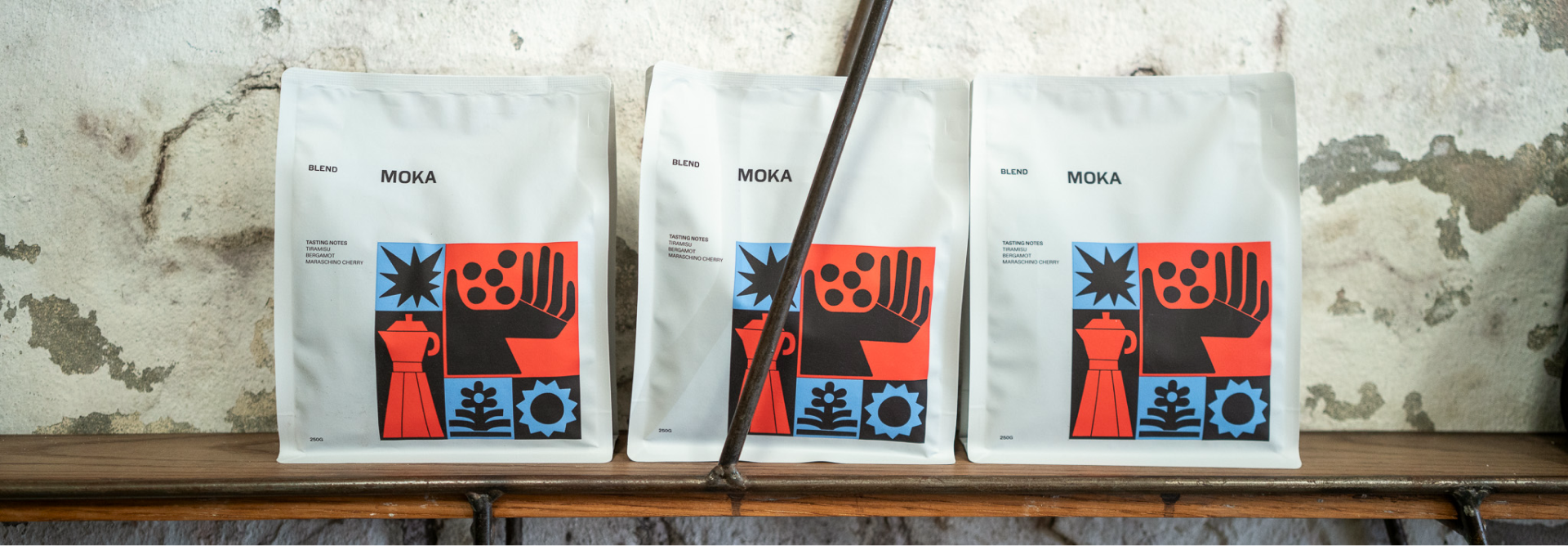
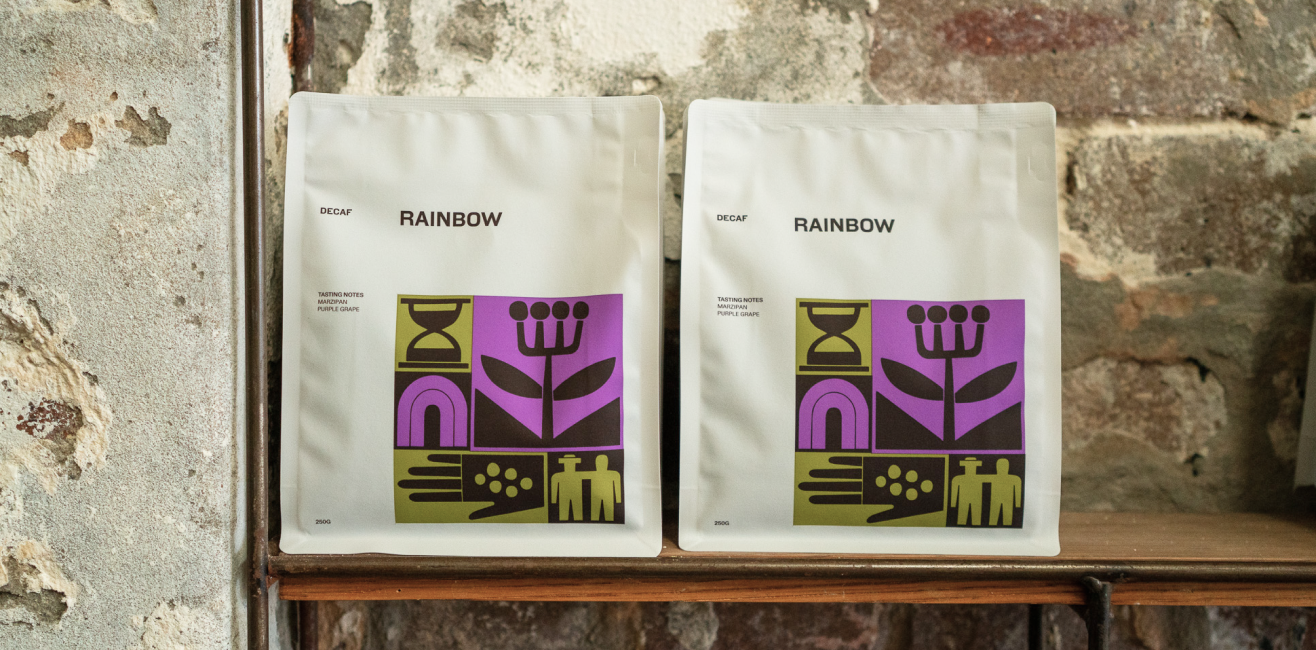
Grounded moved nearly the entire range of Mecca Coffee to a recyclable post-consumer recycled flat-bottom pouch. A mono-material PCR structure carrying 70% recycled content, recyclable through soft-plastics collection.
The packaging is designed in line with the Australian Packaging Covenant Organisation (APCO) soft-plastic recycling guidelines and is suited to Australia's rebuilding soft-plastic recycling pathways. Soft-plastics recycling is currently via store drop-off rather than kerbside collection. Soft Plastics Stewardship Australia is the industry body bringing collection and recycling back to Australian consumers, and as of May 2026 Woolworths has soft-plastics collection points live in more than 700 stores across five states, with material processed by Australian recyclers including iQRenew and saveBOARD.
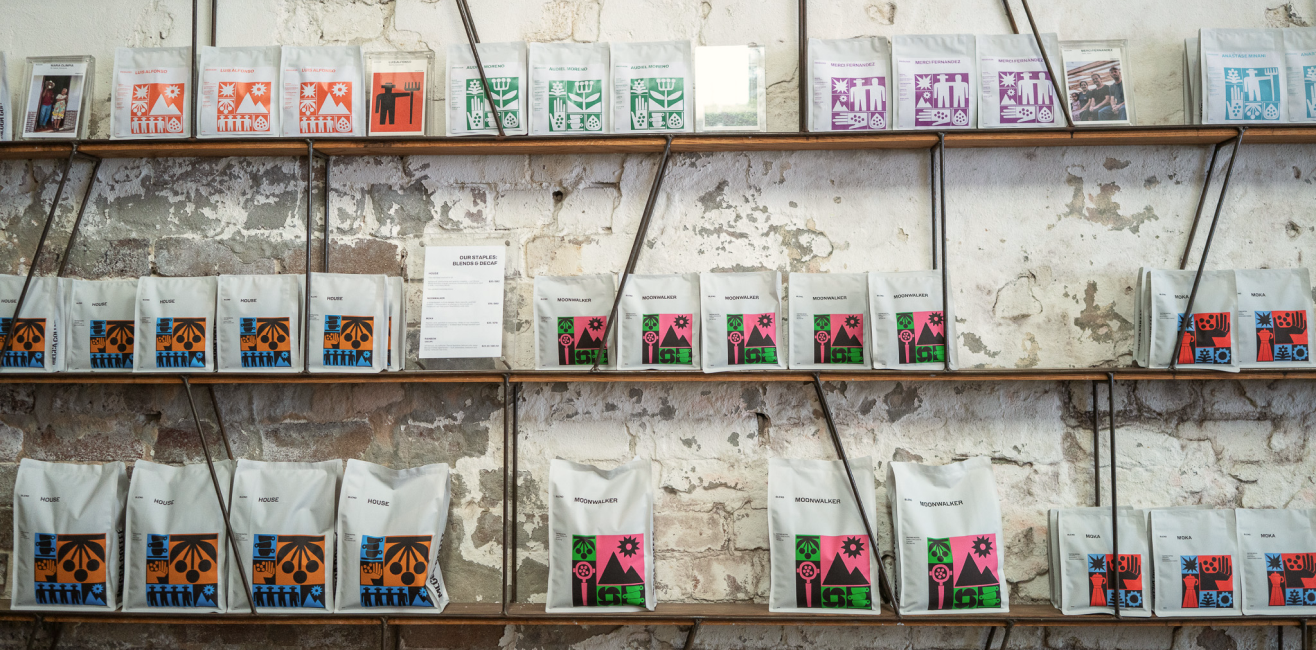
Crucially, custom print now extends across Mecca Coffee's range, not just the two hero blends. The rebrand artwork, developed with designer Chris Doyle alongside Emma Van De Werken, carried across the full set, with Mecca Coffee's icon system telling the story. For the team packing and sending those orders, that consistency has changed how the work feels.
"Having all the printed bags has been lovely. They make you feel better when you're packing and sending everything out — everything looks immaculate. You're sending out something you can be really proud of."
— Laurence Morassut, Dispatch Manager & Roaster, Mecca Coffee
Results
Carbon and material figures come from Mecca Coffee's Scope lifecycle assessment, comparing the chosen recyclable PCR pouch against an equivalent virgin-LDPE pouch on a like-for-like run.
Operations
- Stickering reduced from up to three people for three-plus hours every three days, to roughly an hour at most.
- Custom branding extended from two blends to majority of the range, removing the manual step almost entirely, creating a smoother pack-and-dispatch flow.
Material and carbon
(Scope LCA, recyclable PCR vs virgin-LDPE equivalent)
- 70% post-consumer recycled content.
- 22% lower total carbon footprint (2,149 vs 2,757 kg CO₂e).
- 70% reduction in reliance on virgin fossil-fuel feedstock (30% vs 100%).
- Material Circularity Indicator of 38% — more than triple the 12% of the virgin-LDPE equivalent.
Brand and commercial
- The new visual identity brought to life on the pouch, in Mecca Coffee's words, "speaks for us," carrying the brand story across every SKU.
- Consistently positive feedback from wholesale accounts and their customers.
- Packaging the team is proud to send: "everything looks immaculate."
Once we came in with Grounded and changed all our packaging, it's elevated to another point, like, 'Cool, we're ready now to tackle the next 10 years.
— Laurence Morassut
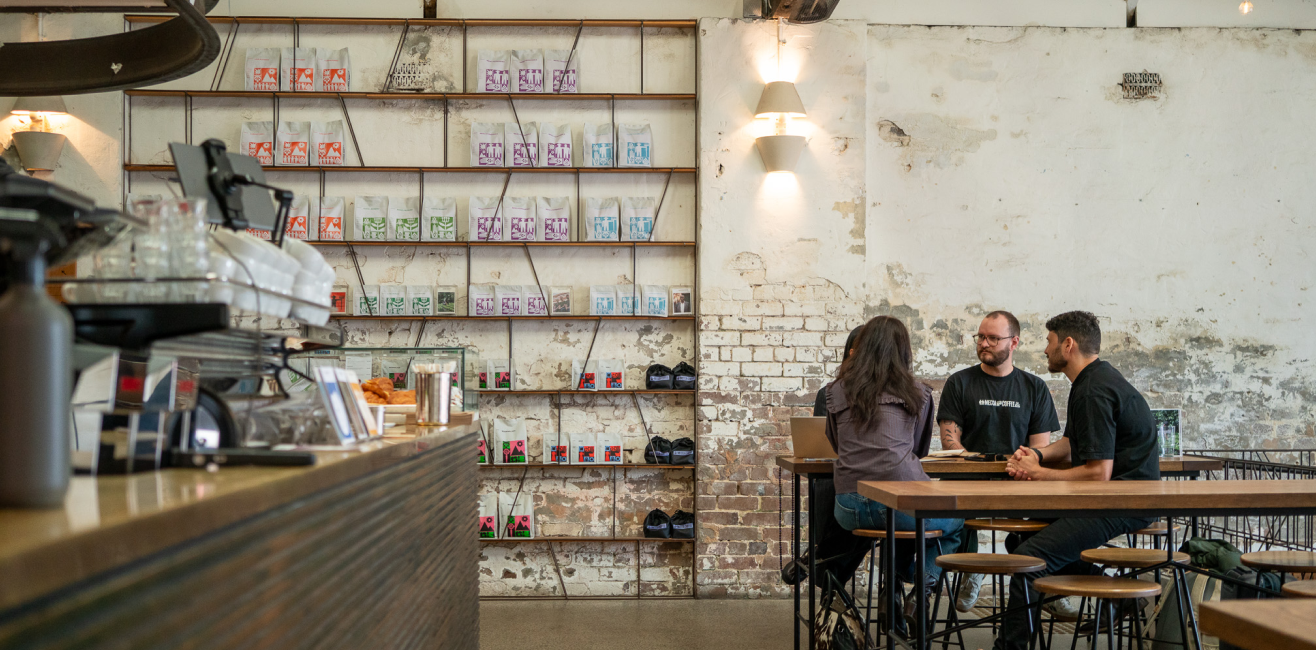
What the partnership made possible
It's a quiet-confidence story end to end: a brand already doing the right thing did it more deliberately, and built the foundation to keep doing it — without needing to shout. One decision sharpened the brand, freed the dispatch floor, and improved the real-world footprint of the pack.
It also sets up the next chapter. Mecca Coffee considers this a soft launch; the sustainability story is still mostly held back, waiting until the team can communicate it with the same integrity they bring to sourcing. That's where verified data earns its place. Grounded's third-party, peer-reviewed Scope LCA gives Mecca Coffee substantiated numbers to tell that story honestly, when they're ready, on their own terms.
What's next
A second piece is still rolling out: a managed inventory model. Instead of forecasting a full annual order and carrying it, a real strain for a lean team, Mecca Coffee holds stock locally with Grounded's warehousing and draws it down via an online portal, delivered in two to three days. It removes the long lead times, the upfront cash-flow hit, and the warehouse bottleneck.
Want to See Your Own Packaging's Verified Impact?
Scope is Grounded’s lifecycle assessment platform. It generates verified lifecycle data for any flexible packaging format, the same data that underpins the carbon claims in this case study.

Subscribe to our newsletter
Stay up to date with packaging news and industry updates.


.webp)