


Material Differences
Compostable vs Biodegradable Packaging: What the Labels Actually Mean
Key takeaways
Compostable and biodegradable get used interchangeably on packaging all the time. On supermarket shelves, in brand copy, in supplier specs. For most people, that makes complete sense: both words suggest a material that returns to the earth rather than persisting in landfill for centuries. The intention behind them is the same.
The problem is that they are not the same thing. One is a certified, measurable claim with defined timeframes and independent verification. The other, in most markets, has no legal definition, no required conditions, and no standard for what actually needs to happen to the material. This article draws a clear line between the two: what each term actually requires, where the certifications apply, and what the regulatory landscape now demands from brands making either claim.
What is the difference between compostable and biodegradable packaging?
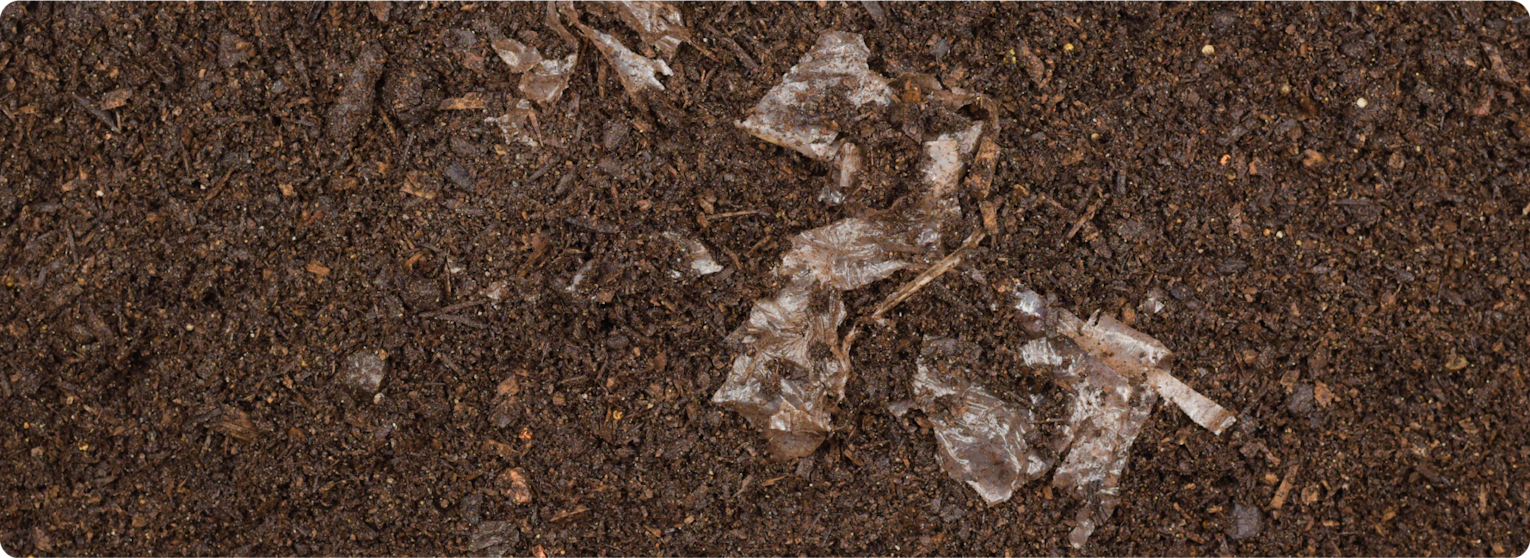
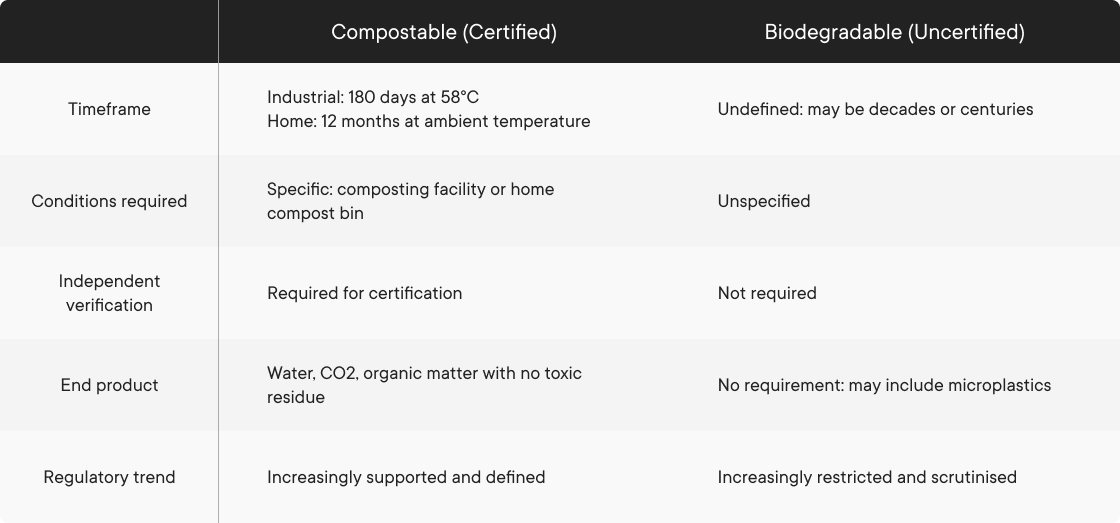
Compostable packaging has been independently certified to break down fully within a defined timeframe, under specific conditions, into water, carbon dioxide, and organic matter with no toxic residue. Two categories exist: industrial compostable (58°C, 180 days, composting facility required) and home compostable (ambient temperature, 12 months, home compost bin required). Biodegradable is an uncertified claim that a material will eventually break down, with no standard timeframe, conditions, or infrastructure requirements. In practice, a product marketed as biodegradable may take decades or centuries to break down, and may fragment into microplastics rather than harmless organic matter. The two terms are not interchangeable.
READ MORE: to learn more about compostable packaging, read our breakdown here.
What "biodegradable" actually means, and what it does not
Biodegradable means a material is capable of being decomposed by bacteria or other living organisms. Every organic material is technically biodegradable given enough time. The problem is that "enough time" can be anywhere from weeks to several hundred years, depending on the material and the conditions it is in.
The word on a packaging label implies something much faster and cleaner. That implication is not backed by any regulatory requirement in most major markets. In some cases, products labelled as “biodegradable” may actually be harmful to the environment or wildlife, especially if they break down into smaller, persistent microplastic particles that can be ingested by animals and enter the food chain.
In the US, the FTC's Green Guides require that a biodegradable claim be substantiated by evidence that the product will completely break down within a reasonably short period after customary disposal. For landfill-disposed products, the FTC treats approximately one year as the working benchmark. In practice, most flexible plastic packaging marketed as biodegradable does not come close. In the EU and UK, the broader claim remains unregulated, though the EU did ban oxo-degradable plastics in 2021 after they were found to fragment into microplastics rather than break down into organic matter. Australia has no federal definition for the term in packaging.
The practical result: "biodegradable" on packaging without a certification mark tells you almost nothing about what will actually happen to the material.
What "compostable" actually means
Compostable packaging is a materially different claim to biodegradable packaging. Certification bodies require a material to meet precise, measurable standards before it can carry a certified compostable label: disintegration to pieces smaller than 2mm within a specified timeframe; at least 90% carbon conversion to CO2 within the test period; no ecotoxicity in the resulting compost; and no heavy metals above defined thresholds.
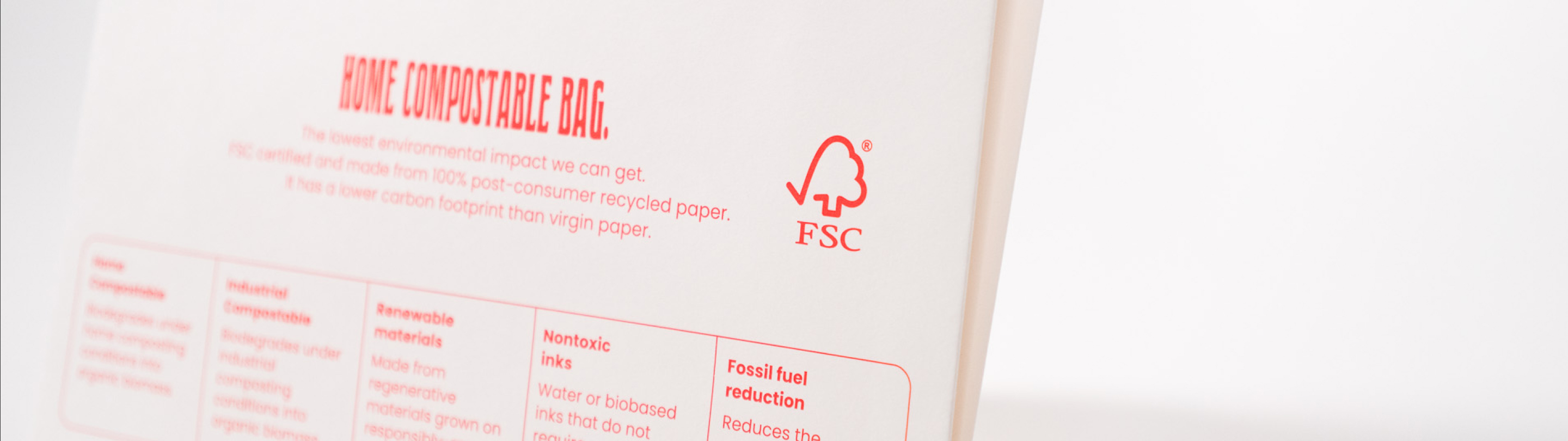
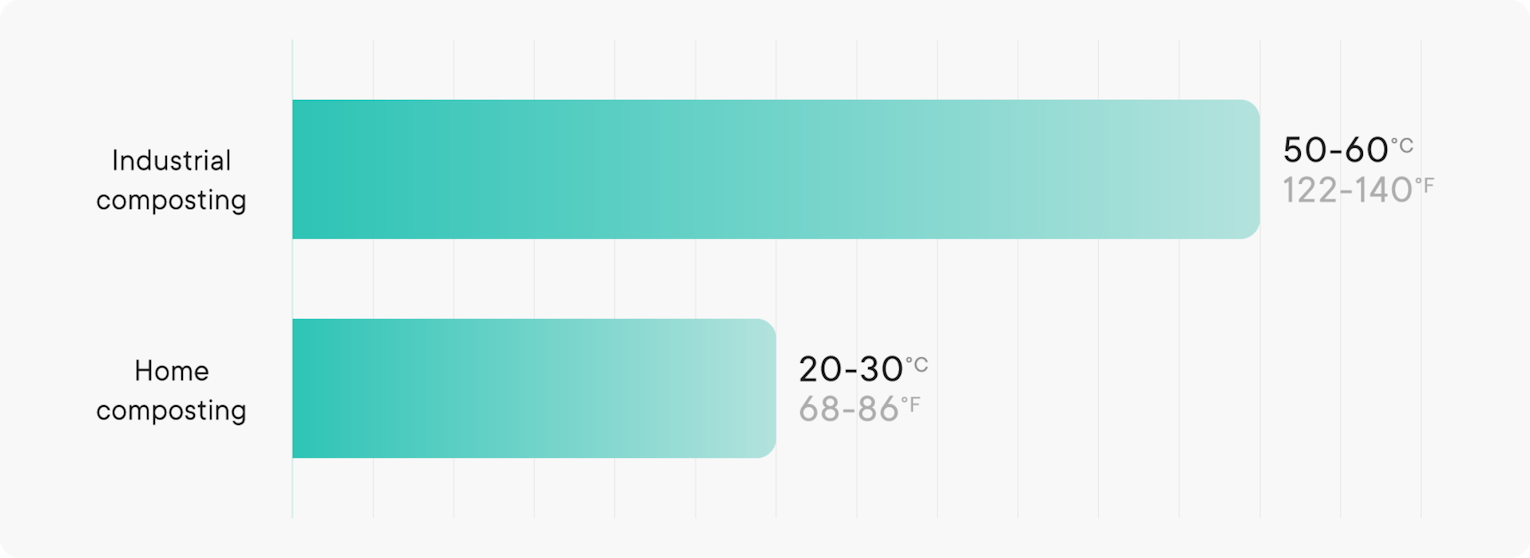
Industrial compostable packaging requires a composting facility operating at 58°C. Certified materials break down within 180 days. Certification marks include the Seedling logo, TUV OK compost INDUSTRIAL, BPI (US), and ABA industrial certification (Australia). If industrial compostable packaging ends up in a home compost bin, a general waste bin, or a recycling bin, it will not perform as certified.
Home compostable packaging must fully biodegrade within 12 months at ambient temperatures of 20-30°C, with no toxic residue. The standard is more demanding because the conditions are less intensive. Relevant certifications: TUV OK compost HOME, BPI home compost, and ABA home compostable. These marks are less common precisely because they are harder to achieve. Home compostable packaging should not go into kerbside recycling, where it contaminates the recyclable plastics stream.
The certification mark is the only reliable indicator. "Home compostable" without a TUV, BPI, or ABA mark is an unverified claim.
Why "biodegradable" has become a marketing problem
The gap between what "biodegradable" implies and what it delivers is not accidental. The term is commonly used because it has no enforceable standard and is essentially impossible to disprove without testing over extended timeframes.
Oxo-degradable plastics are the clearest example: materials containing additives that caused rapid fragmentation, marketed as biodegradation, producing microplastics. The EU banned them. The UK followed. The same pattern applies more broadly: standard LDPE marketed as "biodegradable" may fragment over decades but will not fully biodegrade in any normal disposal environment within a human-relevant timeframe.
The regulatory response is accelerating. EU Directive 2024/825/EU, which takes effect September 2026, restricts broad environmental claims including biodegradable where they create a misleading impression without substantiation. For brands, unsubstantiated biodegradable claims are transitioning from a marketing asset into a regulatory liability.
Compostable vs biodegradable: the key differences
What this means for you and your brand
The commercial risk in this area has shifted. From September 2026 in the EU, and increasingly in the UK and US, unsubstantiated environmental claims are moving from a regulatory grey area into an active enforcement zone.
The practical path is straightforward. If compostable packaging is right for your product, specify a certified material and use the corresponding certification mark. If compostable is not right for your product, post-consumer recycled (PCR) laminates or recyclable mono-material structures carry their own verifiable claim sets. What the market will not tolerate indefinitely is "biodegradable" as a substitute for either.
If you are reviewing your current packaging or specifying new sustainable packaging and want to understand which end-of-life pathway is substantiable for your product, speak to our team here.
Frequently asked questions
Is biodegradable packaging always bad?
The problem is not the material science. Some materials genuinely biodegrade quickly under the right conditions. The problem is the claim without certification: no defined timeframe, no specified conditions, no independent verification. A certified compostable mark is the substantiated, regulated version of the same idea. The word "biodegradable" alone is the problem, not the underlying aspiration.
Can compostable packaging go in my recycling bin?
No. Compostable packaging should not enter the kerbside recycling stream. Compostable bioplastics cannot be processed alongside conventional LDPE, PET, or PP and will contaminate the stream. The correct end-of-life pathway is a home compost bin or an industrial composting facility, depending on the certification type.
What happens to compostable packaging in landfill?
It will not perform as certified. Landfill is an anaerobic environment with limited oxygen, low temperatures, and suppressed microbial activity. Even organic material breaks down very slowly in these conditions and produces methane in the process. This is why the correct infrastructure pathway matters as much as the material itself.
What is the difference between the Seedling logo and TUV OK compost INDUSTRIAL?
Both certify against EN 13432 for industrial compostability, but they are different marks from different schemes. The Seedling is a European Bioplastics trademark, awarded by DIN CERTCO or TÜV Austria. TUV OK compost INDUSTRIAL is TÜV Austria's own separate certification mark. A product may carry one or both. Either is a valid indicator of certified industrial compostability.
Sources and further reading
- European Commission, Directive (EU) 2024/825/EU empowering consumers for the green transition: eur-lex.europa.eu
- European Commission, Directive (EU) 2019/904 on single-use plastics (oxo-degradable ban): eur-lex.europa.eu
- FTC Green Guides, 16 CFR Part 260, guidance on biodegradable claims: ftc.gov
- TUV Austria, OK compost HOME and INDUSTRIAL certification: tuv-at.com
- BPI, compostable certification programme: bpiworld.org
- ABA, Australasian Bioplastics Association certification: bioplastics.org.au
- ACCC, Making environmental claims: a guide for business: accc.gov.au
Thanks. Your checklist is ready:
Download the checklist →Something went wrong. Please try again or email hello@groundedpackaging.co
Frequently asked questions
No items found.
Talk to a specialist
Not sure where your packaging lands?
Get a recyclability and EPR fee review of your current formats.
Not sure how your packaging will rate under EPR and PPWR?
Our packaging specialists can review your formats against the UK RAM ratings and EU PPWR design rules.
Talk to a packaging specialistthumbnail.png)


Subscribe to our newsletter
Stay up to date with packaging news and industry updates.


.webp)